
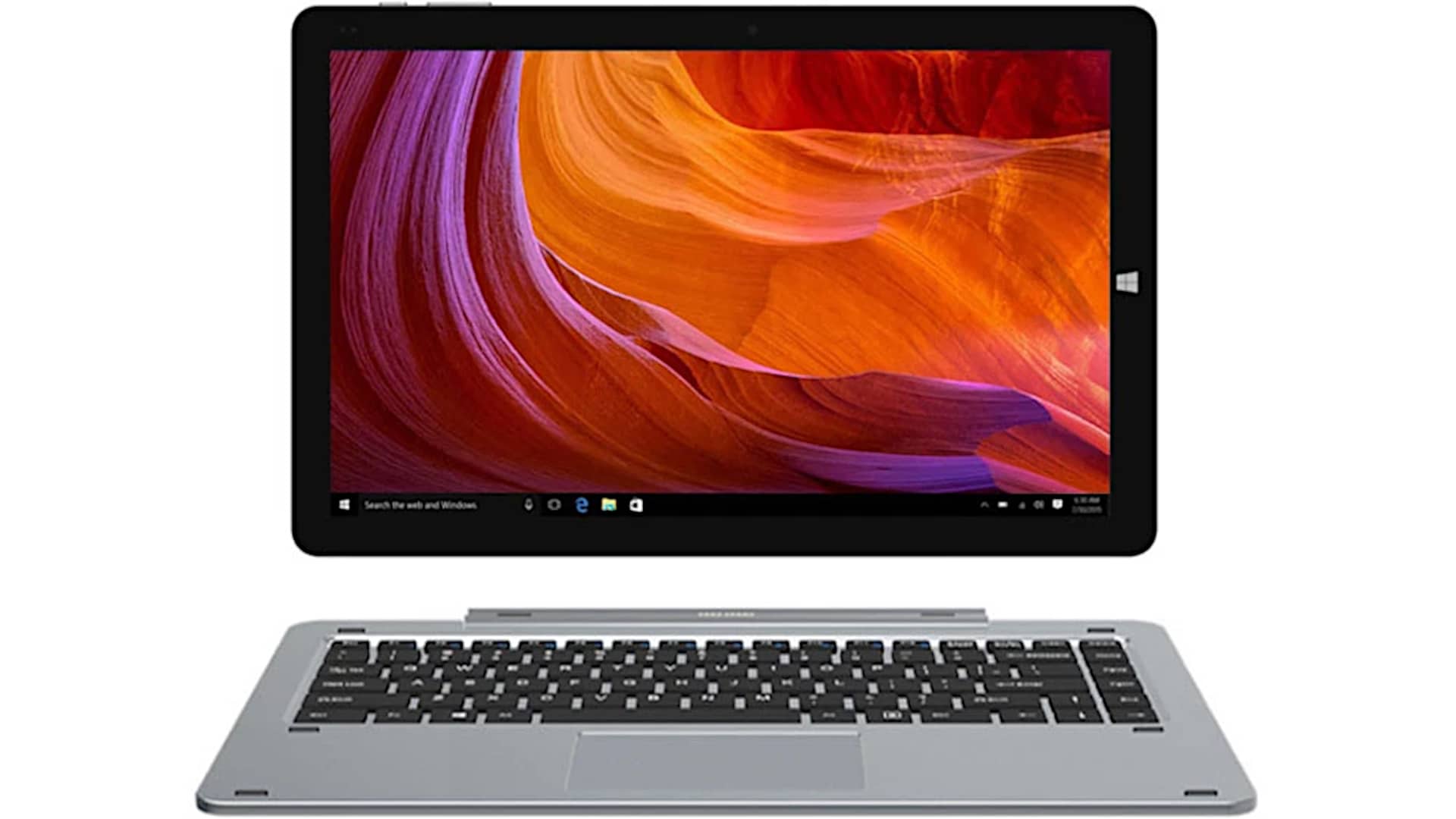
In this article, I give you my Chuwi Hi13 review with specs included. This is a more affordable Surface Book competitor, even though it has more of the Asus Transformer Book keyboard base.
The price for this tablet is only $350 MSRP for the tablet part, $50 for the keyboard, and another $25 dollars or so for the pen. The price varies from day to day, but the average is about $350 for the tablet and $420 for the whole package. So, an order of magnitude less money than the Surface Book.
The tablet, the keyboard, and the pen are all sold separately. It’s a magnetic dock; it connects magnetically to the tablet. You just put it anywhere near it, and it will grab it. Those are some strong magnets.
Like the Asus Transformer keyboard, the docking adjustment is very stiff; it’s really hard to move this just by your hand. The good news is it’s fairly firm; you can still have some display wobble, but it works out OK. Plus, the keyboard dock is made out of metal.
This keyboard is not backlit; for the price, you’re not going to get that, let’s be real. It’s pretty decent; it’s a little on the noisy clacking side, but it works; it does the job.
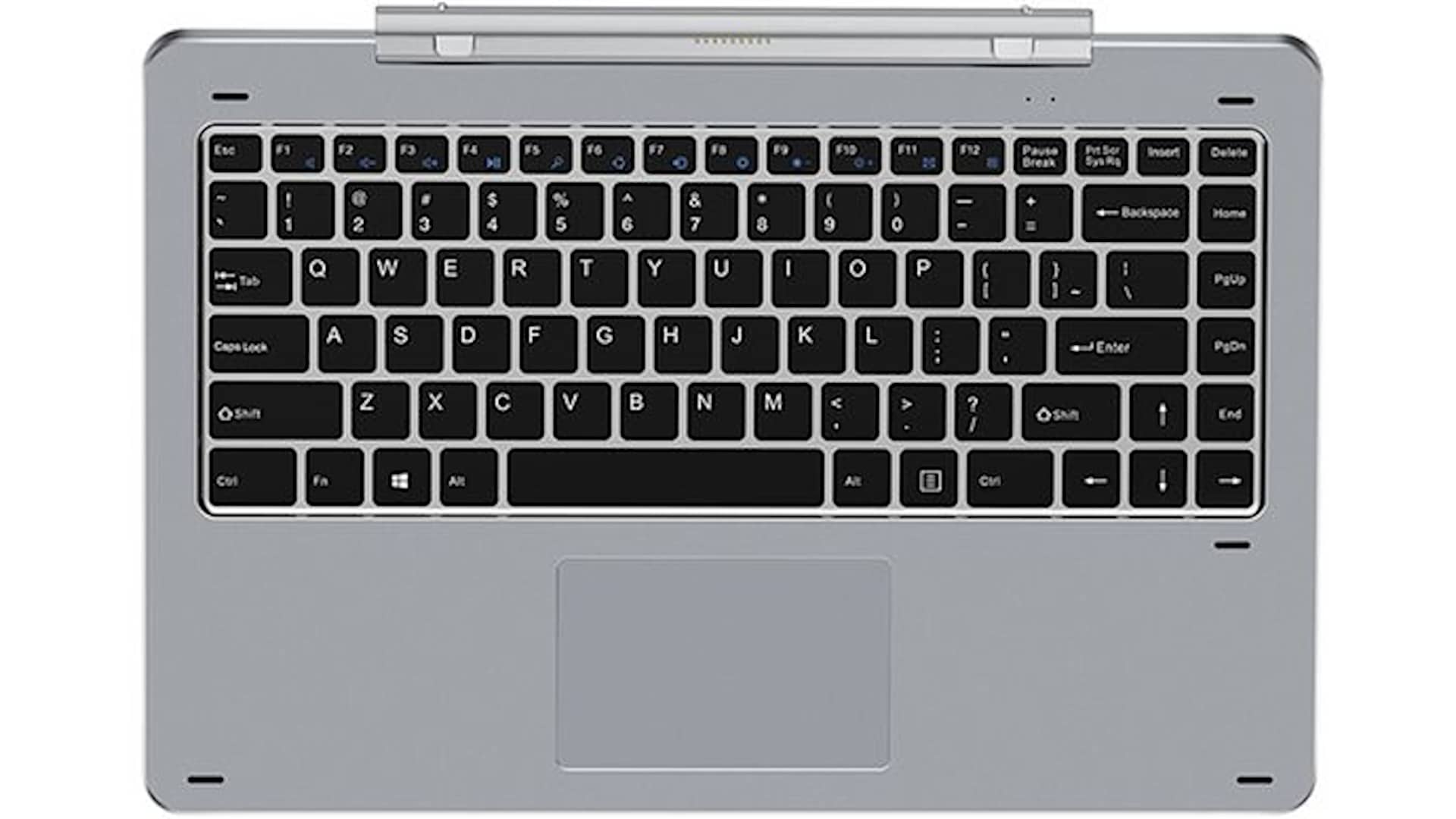
The trackpad is what you would expect; it’s just average. Two-finger gestures, like for scrolling, actually work pretty well on this. The clicker is really stiff, and the tracking is ok; it’s not terrible, but it’s not great.
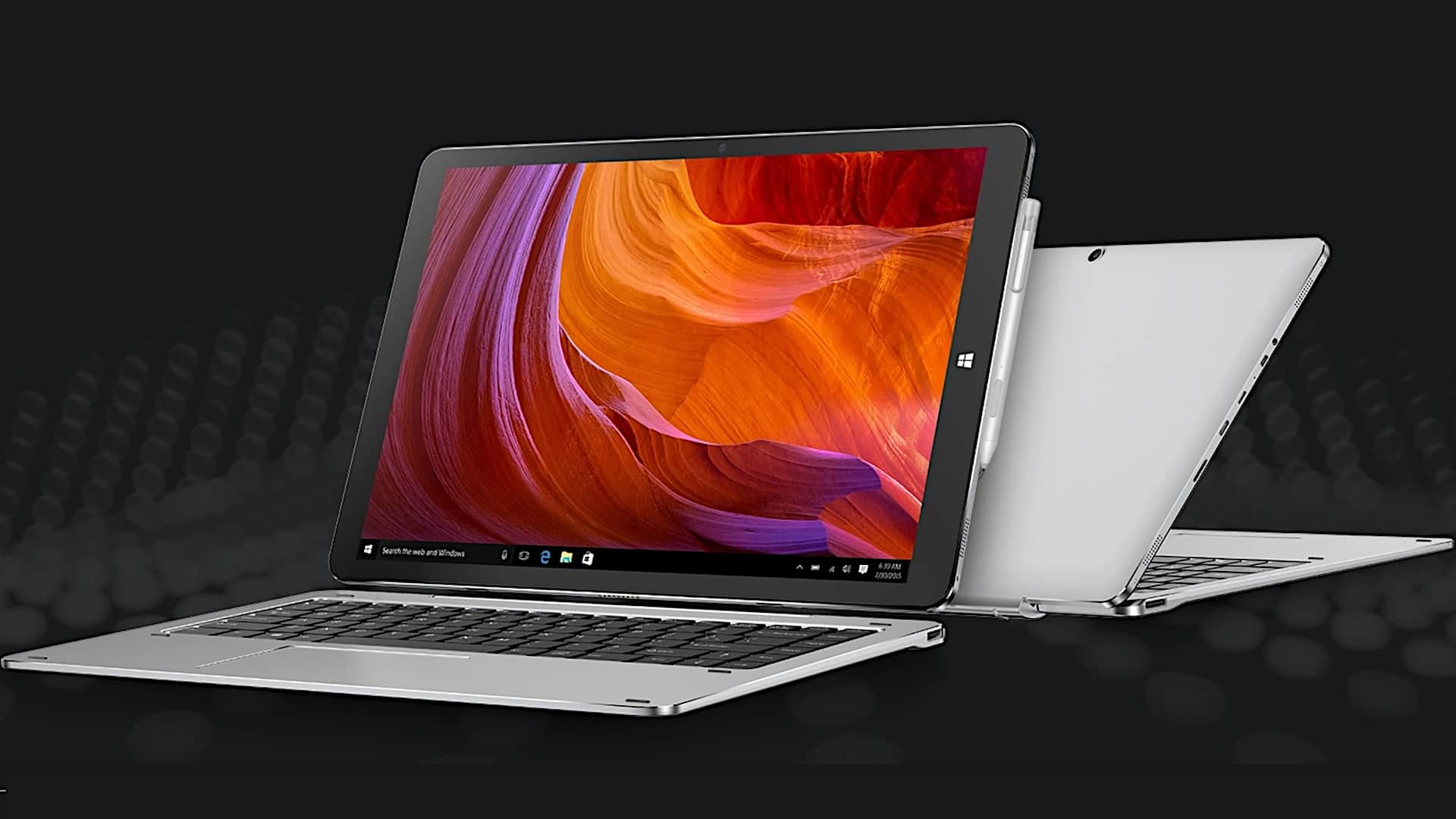
There’s no battery or anything like that inside this keyboard dock like there would be with Surface Book or with the old instances of Asus Transformers, but there are two USB-A ports. So that’s handy because if we take a look at the tablet itself, we see it’s pretty minimal on ports.
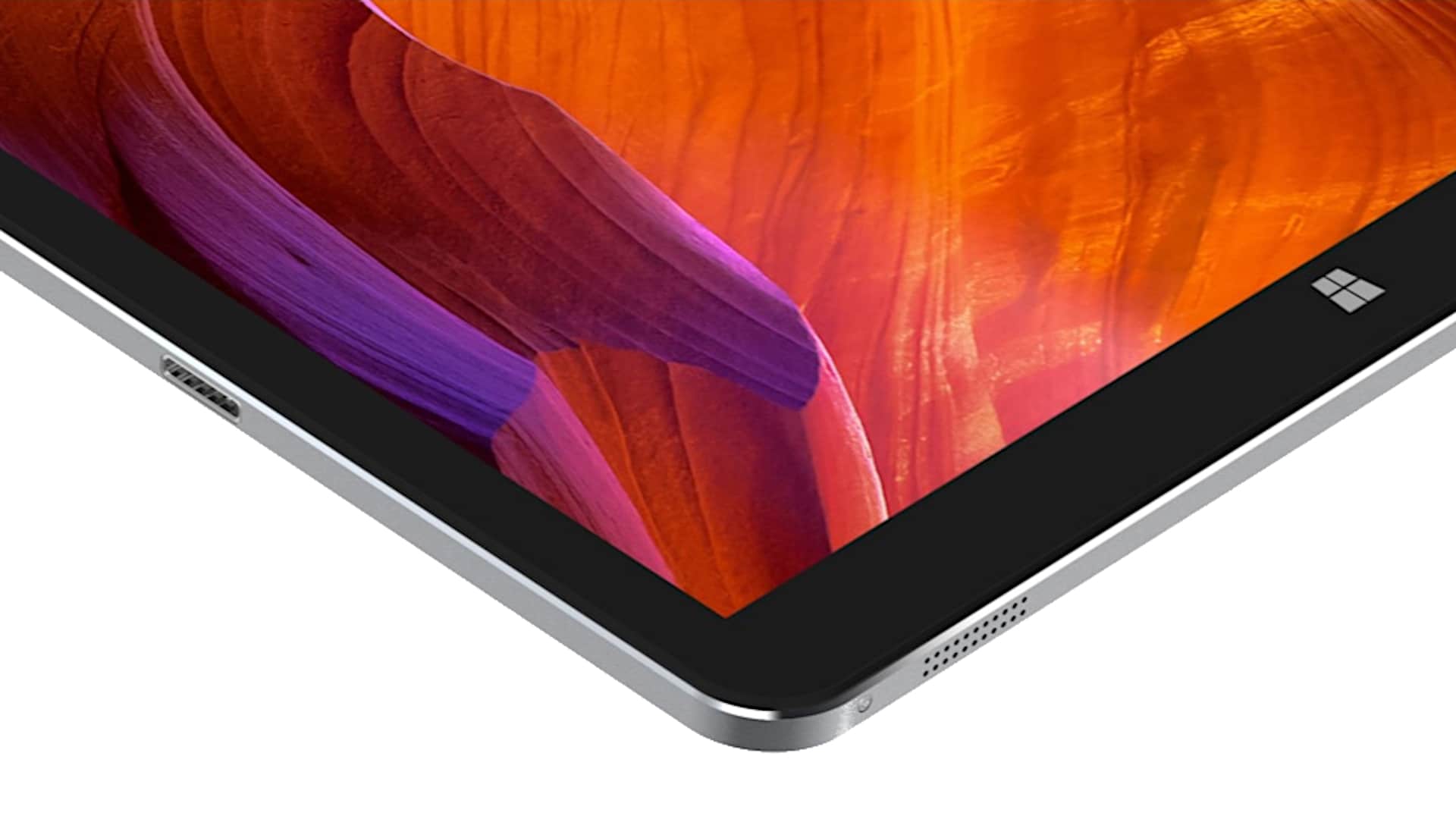
Tablets don’t tend to have a lot of ports, even the Windows 10 tablets I had. The most exciting is the USB-C port, and this tablet has Gen 1 3.1. I actually connected this to a 4K display before, and it was having some problems with that because it’s already driving this big resolution display of three thousand by two thousand pixels, and then I throw in 4K. Not working well with that.
Chuwi Hi13 has an Intel Celeron inside, not the best budget CPU, a little bit better than Atom with Intel HD graphics, so pretty low-end stuff. And that’s the Intel Celeron N3450, 1.1 gigahertz boost to 2.2 gigahertz.
CHUWI Hi13 Review
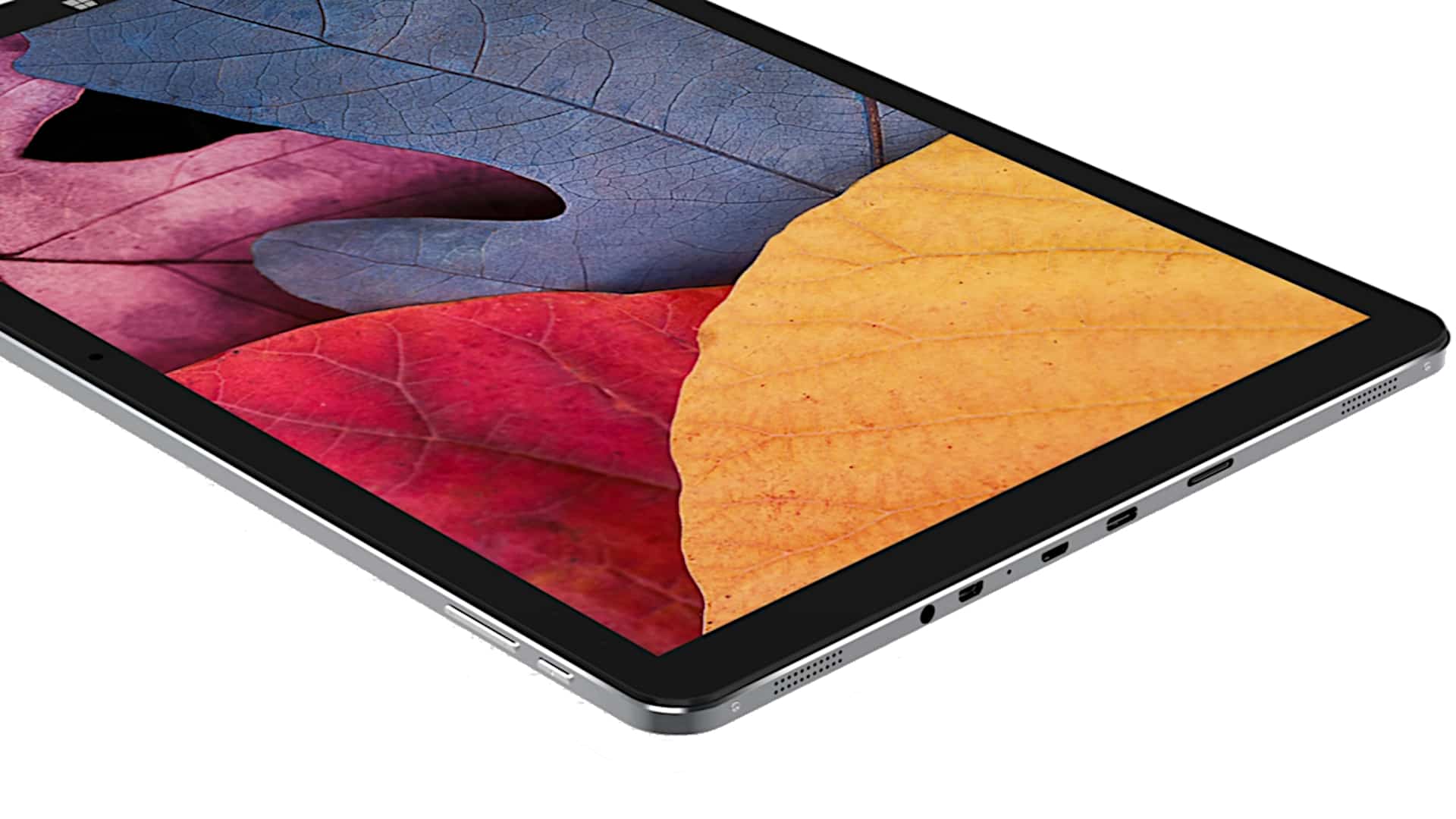
The CHUWI Hi13 includes a USB-C port that handles both charging and external display output. If you plan to connect a monitor, a 1080p display is a sensible match for the hardware. The tablet ships with a USB-C charger and also offers a micro USB 2.0 port, micro HDMI output, and a standard headphone jack.
Design and Build Quality
Port selection is fairly basic, but the overall construction is surprisingly solid. Speaker grilles are located along the sides, housing four speakers in total. While the speaker count sounds impressive on paper, the audio quality is rather thin and lacks depth.
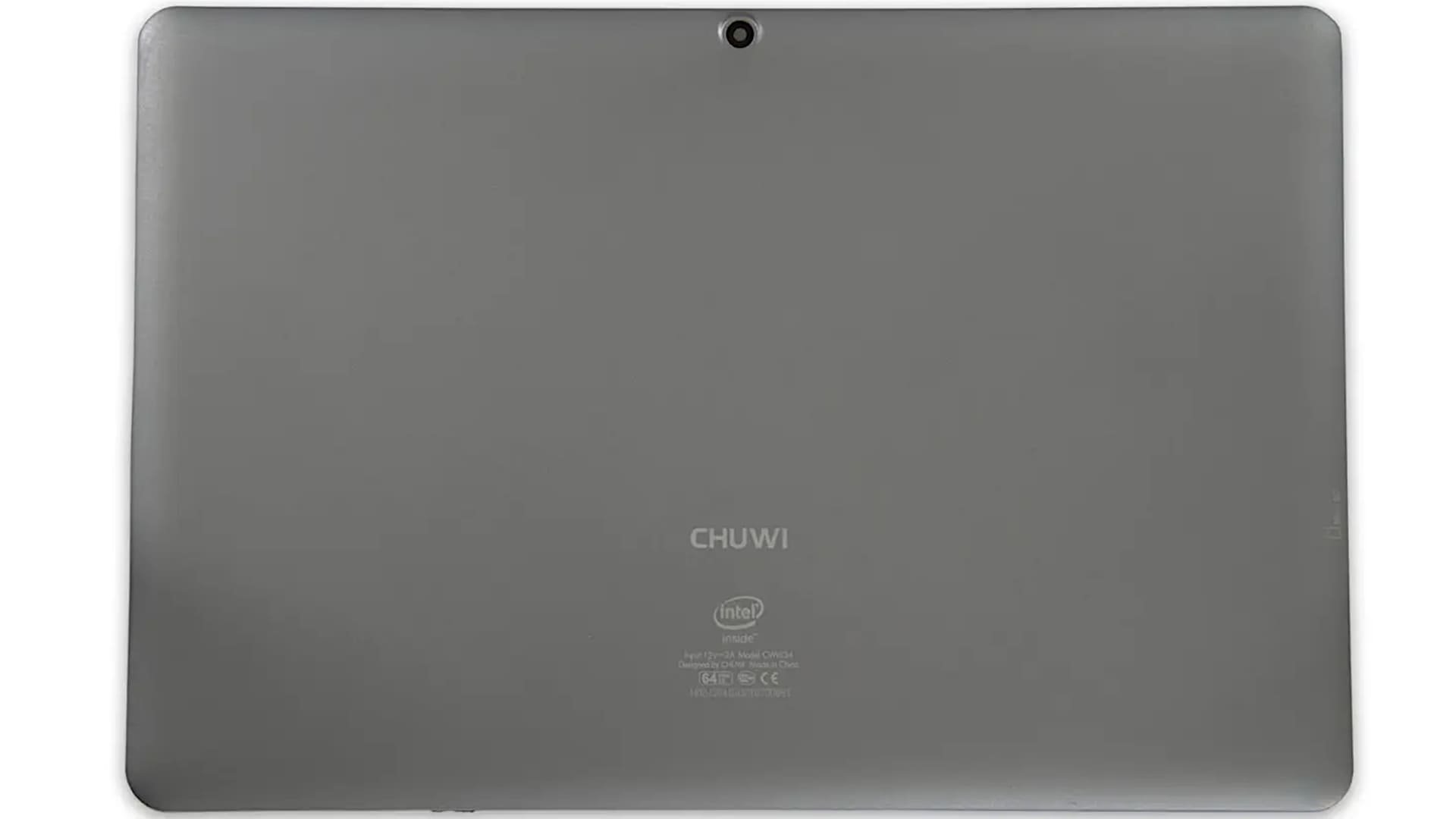
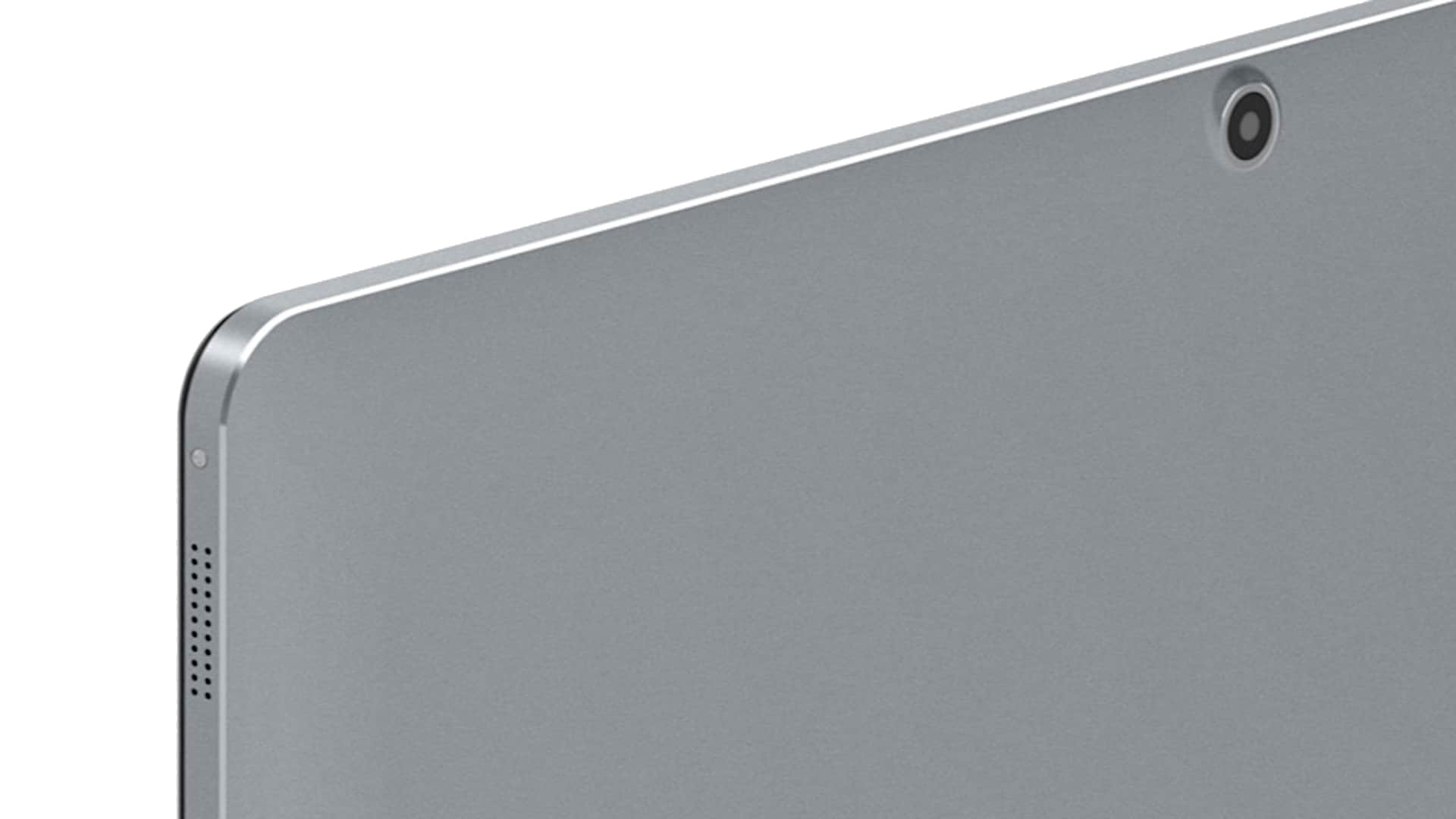
The rear panel is made from metal and feels sturdy in hand. The chamfered edges add a premium touch, and the chassis exhibits very little flex. Overall, the Hi13 feels much better built than its price might suggest.
Hardware Specifications
It’s important not to compare the Hi13 directly to devices like the Microsoft Surface Book. While it shares a similar large, high-resolution display concept, the internal hardware targets a completely different market.
The tablet is powered by an Intel Celeron processor, paired with 4GB of RAM and 64GB of eMMC storage. The storage solution is considerably slower than a traditional SSD, resulting in longer installation times and slower overall responsiveness. After Windows installation, roughly 37GB of usable storage remains available.
That said, this device isn’t intended for demanding applications or large game installations. It’s aimed at basic productivity and media consumption.
Display Quality
The 13.5-inch display is arguably the highlight of the Hi13. It offers a high-resolution IPS panel with wide viewing angles and nearly complete sRGB color coverage, which is uncommon in this price category.
One issue observed during testing was extremely noticeable PWM flickering when viewed through a camera. While this flicker is largely invisible to the naked eye and did not cause noticeable eye strain during use, it was among the most severe examples captured on video.
Aside from that concern, display quality is impressive. Colors are vibrant, viewing angles are excellent, and the panel calibrates reasonably well. The glossy finish helps deliver a sharp image, although the display lacks a laminated design, meaning there is a visible air gap between the glass and the panel underneath.
Given the price, this compromise is understandable.
Weight and Portability
Unlike many premium tablets, the Hi13 is fairly heavy. The tablet alone weighs approximately 2.4 pounds (1.1 kg), while the keyboard base adds another 2 pounds (0.9 kg). Combined, the package weighs around 4.4 pounds (2 kg).
For comparison, many premium detachable devices are significantly lighter. If portability is your primary concern, this may not be the ideal choice. However, considering the large display and budget pricing, the weight is somewhat understandable.
Performance
Performance is modest and reflects the device’s entry-level hardware. The Intel Celeron processor sits only slightly above Intel’s Atom lineup. It features four cores and can boost from its base clock up to approximately 2.2GHz, but performance remains limited.
Simple multitasking can cause noticeable slowdowns. Tasks such as copying files while browsing the web may reveal lag, making it clear that this device is intended for light workloads only.
For basic productivity tasks such as:
- Microsoft Word
- Web browsing
- PDF reading
- Note-taking
The Hi13 performs adequately.
Creative applications are more of a mixed experience. Lightweight drawing programs work reasonably well, but demanding software such as Adobe Photoshop struggles significantly. Photo editing is possible only at a basic level, while video editing is largely impractical.
Battery Life
The tablet contains a 37Wh battery, with no additional battery integrated into the keyboard dock.
Battery life generally falls between 6 and 7 hours during typical use, including web browsing, productivity work, and media consumption. Considering the large display and low-power processor, these results are respectable, though not exceptional.
Pen Experience
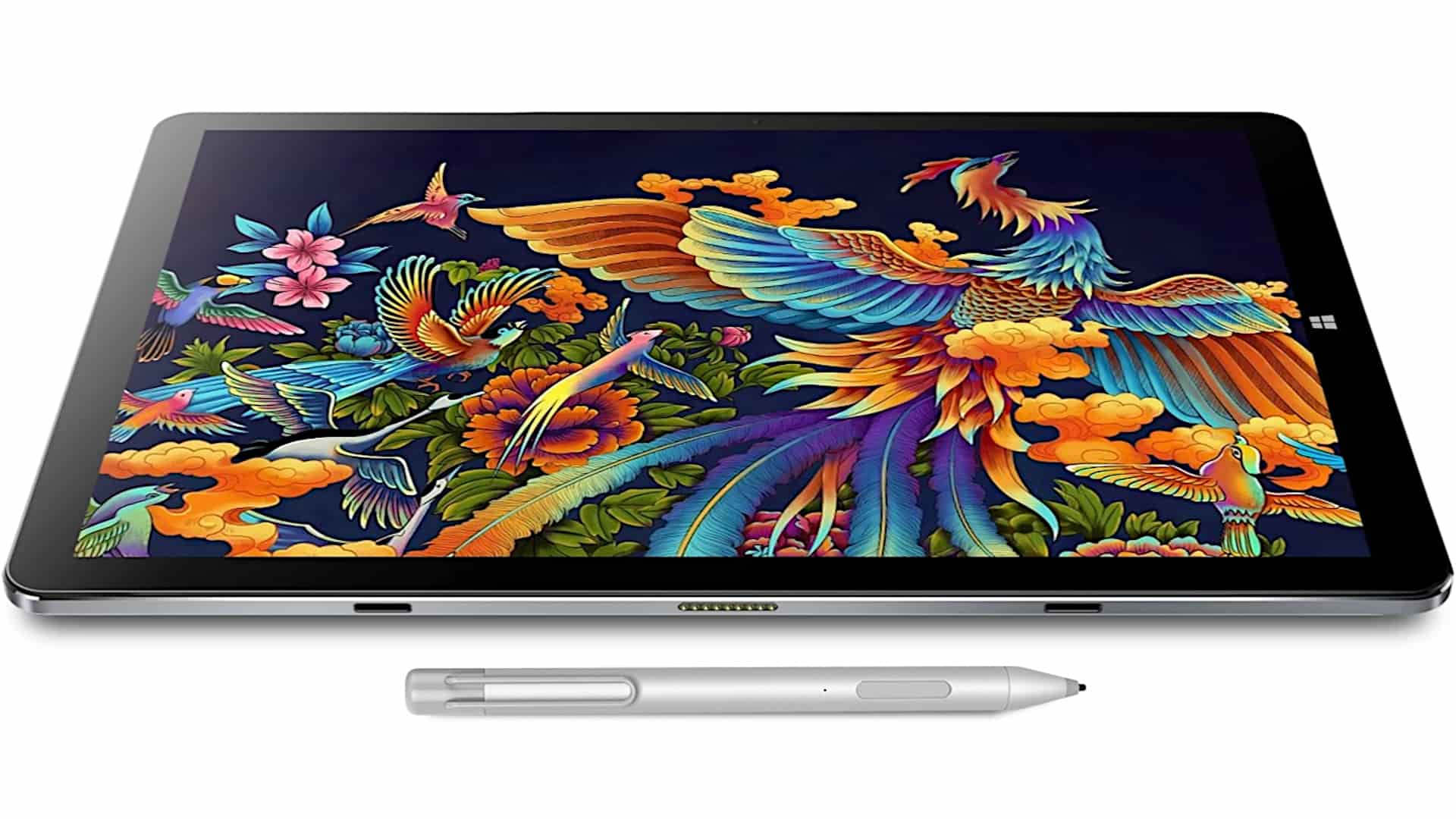
The CHUWI HiPen 3 is a pleasant surprise. Earlier versions of CHUWI’s pen technology received mixed reviews, but this generation performs much better.
The stylus features:
- Pressure sensitivity
- Two side buttons
- Palm rejection support
- AAAA battery power
While it doesn’t use technologies such as Wacom EMR, Wacom AES, or Microsoft’s N-trig system, it performs surprisingly well for the price.
Pressure sensitivity works reliably, and pen tracking is responsive in lightweight drawing applications. Programs such as Autodesk SketchBook, Mischief, and Clip Studio Paint are usable and offer a respectable drawing experience.
Some minor issues remain, including occasional line jitter during slow diagonal strokes and occasional missed inputs, but overall performance exceeds expectations for a budget device.
Palm rejection works, although not as consistently as premium pen-enabled tablets.
PDF Annotation and Note-Taking
The Hi13 performs quite well for handwritten notes and PDF markup.
Applications such as:
- Adobe Acrobat Reader
- Microsoft OneNote
- Basic note-taking apps
all function smoothly enough for classroom, office, or personal use. Large documents may scroll somewhat slowly, but writing and annotation remain responsive.
Final Thoughts
The CHUWI Hi13 is not a true competitor to premium devices like the Surface Book. Its processor, storage performance, and overall responsiveness place it in a completely different category.
However, when viewed as a budget-friendly 13.5-inch Windows tablet, it offers tremendous value. For roughly $420 including the stylus, buyers receive:
- A large high-resolution display
- Good color coverage
- Solid metal construction
- A functional pressure-sensitive pen
- A usable keyboard
- Decent battery life
The biggest drawbacks are the slow processor, sluggish eMMC storage, heavy weight, and display PWM behavior.
Still, for note-taking, document annotation, reading, web browsing, and light digital art, the CHUWI Hi13 delivers far more than its price would suggest and remains an impressive value-oriented device.
Chuwi Hi13
-
Performance - 94%94%
-
Price - 94%94%
-
Value - 94%94%