
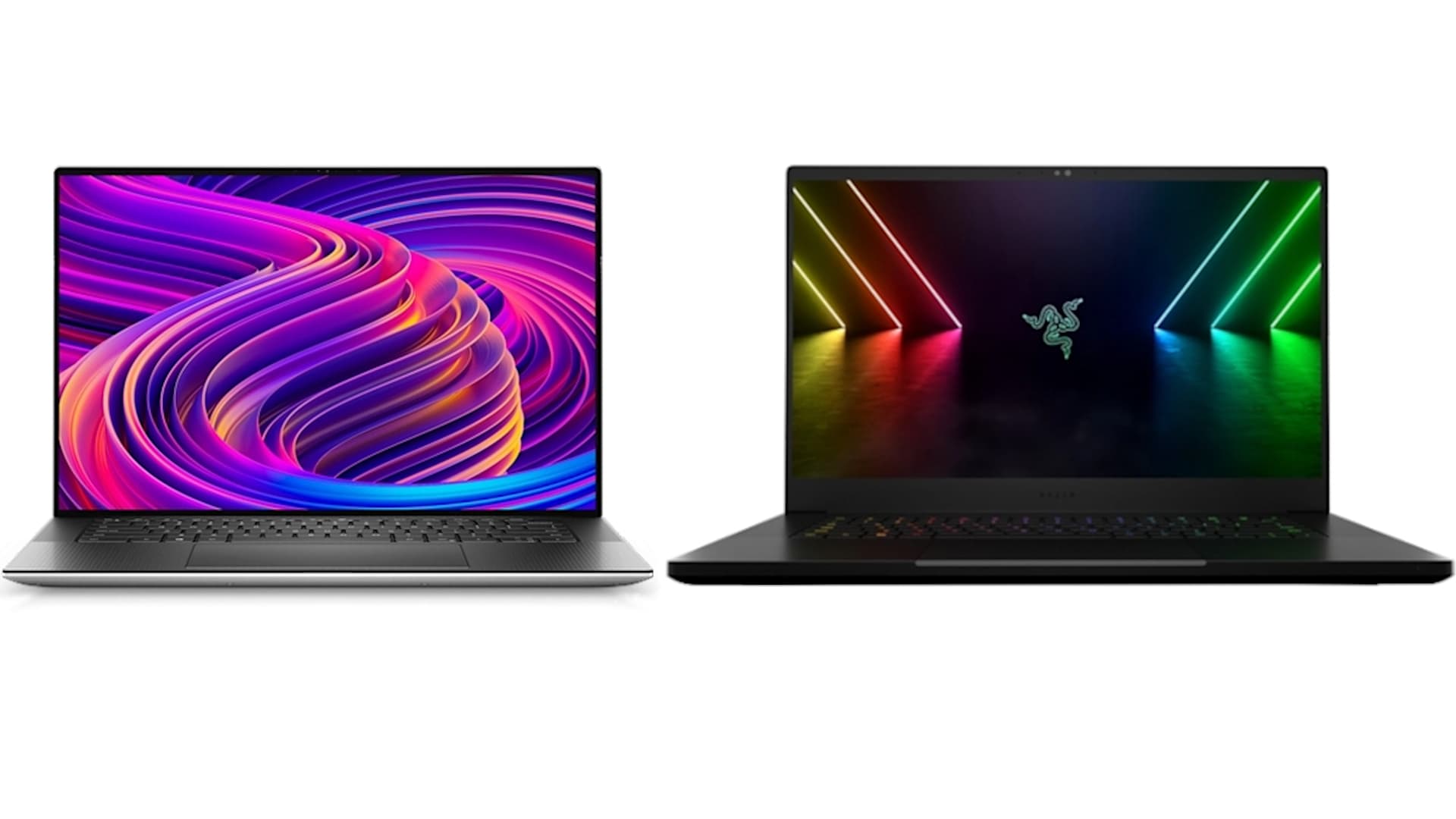
The Dell XPS 15 9570 and the 2018 Razer Blade 15 are two premium 15-inch Windows laptops powered by Intel’s 8th-generation six-core processors. Both combine powerful hardware with slim, portable designs, blurring the line between ultrabooks and performance laptops.
While they target similar users, each device has distinct strengths that make it better suited for different workloads.
Pricing and Configurations
Dell continues to offer strong value for money thanks to its large-scale manufacturing and aggressive pricing.
The Dell XPS 15 configuration reviewed features:
- Intel Core i7-8750H processor
- 16GB DDR4-2666 RAM
- 512GB NVMe SSD
- 4K touchscreen display
This model is priced at approximately $2,100.
One unique aspect of the Dell’s 4K display is unofficial support for Wacom AES pens, although Dell does not officially advertise this capability.
The Razer Blade 15 starts at around $1,899 and includes:
- Intel Core i7-8750H
- 16GB DDR4-2666 RAM
- 256GB NVMe SSD
- Full HD 60Hz matte display
The higher-end Blade 15 configuration costs roughly $2,599 and upgrades to:
- 512GB NVMe SSD
- 144Hz Full HD display
- NVIDIA GTX 1070 Max-Q graphics
As configured, the Razer Blade is more expensive than the Dell, but it also delivers significantly stronger gaming performance.
Design and Build Quality
When it comes to premium construction, the Razer Blade 15 is one of the most refined Windows laptops available.
Its unibody aluminum chassis feels exceptionally solid and features a sleek matte-black finish. The design is minimalist, with clean lines and almost invisible seams. Although the finish attracts fingerprints, it remains one of the best-looking laptops in its class.
The Dell XPS 15 also offers excellent build quality but takes a different approach. It combines a silver aluminum exterior with a black carbon-fiber interior. While the carbon fiber feels comfortable and distinctive, the mixture of materials gives the laptop a less unified appearance compared to the Razer.
Overall, the Razer Blade wins in terms of premium aesthetics, though the Dell remains a very attractive machine.
Performance and Cooling
This is where the biggest differences appear.
The Dell XPS 15 is designed primarily as a productivity-focused laptop with some gaming capability. It handles:
- Software development
- Virtual machines
- Office productivity
- Photoshop
- Light video editing
without difficulty.
Gaming performance, however, is more limited due to the NVIDIA GTX 1050 Ti Max-Q graphics and Dell’s conservative cooling system.
Modern AAA titles are playable, but demanding games such as Far Cry 5 struggle to maintain high frame rates. Some users have also reported unexpected reboots during gaming sessions, an issue that has been widely discussed online.
The Razer Blade 15 is built with gaming and workstation-class workloads in mind.
Its GTX 1060 or GTX 1070 Max-Q graphics deliver dramatically better performance. In demanding games, frame rates can be more than twice as high compared to the Dell.
Razer’s vapor chamber cooling system effectively manages heat across the CPU, GPU, and supporting components. This allows the laptop to maintain performance during:
- Extended gaming sessions
- 3D rendering
- Blender projects
- Video production workloads
without significant thermal issues.
Everyday Use and Noise Levels
Although the Razer is more powerful, the Dell has advantages for lighter workloads.
During normal productivity tasks, the XPS 15 tends to run quieter and often feels cooler to the touch. Its fans are less aggressive because the system isn’t designed around sustained gaming performance.
The Razer’s cooling system is optimized for high-performance workloads, which means its fans activate more frequently under load.
Users focused on office work, web browsing, and occasional creative projects may appreciate the Dell’s quieter operation.
Networking and Wireless Connectivity
Dell uses the Killer 1535 wireless card, which has received mixed feedback from users.
Some owners report occasional connection drops or issues resuming from sleep. Fortunately, the Wi-Fi card is replaceable, making upgrades relatively simple.
Razer opts for Intel’s Wireless-AC 9260 adapter, which generally offers excellent reliability and performance.
In this category, the Razer Blade earns a slight advantage.
Display Options
Both laptops offer impressive display choices.
Dell XPS 15
Available with:
- Full HD matte non-touch display
- 4K glossy touchscreen
The 4K panel reaches approximately 400 nits of brightness and offers wide color gamut coverage approaching Adobe RGB standards.
Razer Blade 15
Available with:
- Full HD 60Hz matte display
- Full HD 144Hz matte display
- 4K touchscreen display
The 144Hz panel is particularly appealing for gamers thanks to smoother motion and reduced blur during fast-paced gameplay.
The Full HD displays on both machines cover:
- 100% sRGB
- Approximately 75% Adobe RGB
The 4K options on both systems provide even wider color gamuts suitable for content creation.
Dell’s hidden Wacom AES compatibility remains an interesting bonus for users who want pen input.
Stability and Reliability
Surprisingly, the gaming-focused Razer Blade 15 proves to be the more stable machine.
During testing, the Blade handled demanding workloads, extensive gaming sessions, and heavy video editing without crashes or unexpected restarts.
Aside from an occasional charging issue when connecting the power adapter while powered off, the system remained highly reliable.
The Dell XPS 15 showed more problems, particularly under GPU-heavy workloads. Gaming sessions occasionally triggered reboots, and some users continue to report wireless connectivity issues.
For users who regularly push their hardware, the Razer offers greater confidence.
Keyboard, Trackpad, and Audio
Keyboard
The Dell keyboard provides:
- Larger keys
- Slightly more key travel
- Better tactile feedback
The Razer keyboard offers:
- RGB Chroma backlighting
- Customizable lighting zones
- Smaller key layout
Although neither keyboard is perfect, Dell’s typing experience is generally superior.
Trackpad
Both laptops feature excellent Microsoft Precision touchpads with responsive tracking and gesture support.
Speakers
Audio quality is fairly average on both systems. While perfectly usable for everyday media consumption, neither delivers the bass or volume expected from premium multimedia laptops.
Upgradeability
Both laptops are equally serviceable.
After removing the bottom panel, users gain access to:
- Two RAM slots
- One M.2 SSD slot
- Replaceable Wi-Fi card
- Battery
Upgrading storage, memory, or wireless hardware is straightforward on either machine.
Battery Life
Battery endurance strongly favors the Dell.
Dell XPS 15
- 97Wh battery
- Approximately 9 hours or more with the Full HD display
- Longer runtimes during productivity tasks
Razer Blade 15
- 80Wh battery
- Typically 7 to 8 hours of mixed use
- Around 8.5 hours under very light workloads
Display resolution affects battery life significantly on both laptops, but Dell consistently delivers longer runtimes.
Power Adapters
The Dell ships with a relatively compact 130W charger.
The Razer Blade requires more power to support its stronger GPU and therefore includes a larger 230W adapter.
Travelers may appreciate Dell’s smaller charger.
Support and Availability
Dell benefits from its global presence and extensive service network. Customers can choose from various warranty options, including on-site service in many regions.
Razer historically struggled with customer support, but the company has made substantial improvements. Recent experiences indicate faster responses and more reliable service than in previous years.
Final Verdict
The Dell XPS 15 9570 and Razer Blade 15 target different audiences despite sharing similar specifications.
Choose the Dell XPS 15 9570 if you want:
- Lower purchase price
- Better battery life
- Quieter operation
- A productivity-focused laptop
- Occasional gaming and creative work
Choose the Razer Blade 15 if you want:
- Significantly better gaming performance
- Superior cooling
- Better stability under heavy workloads
- Professional 3D rendering capabilities
- High-refresh-rate display options
The Dell remains an excellent choice for developers, students, office professionals, and content creators with moderate workloads. The Razer Blade 15 is the stronger option for gamers and users who routinely push their hardware with demanding applications.