
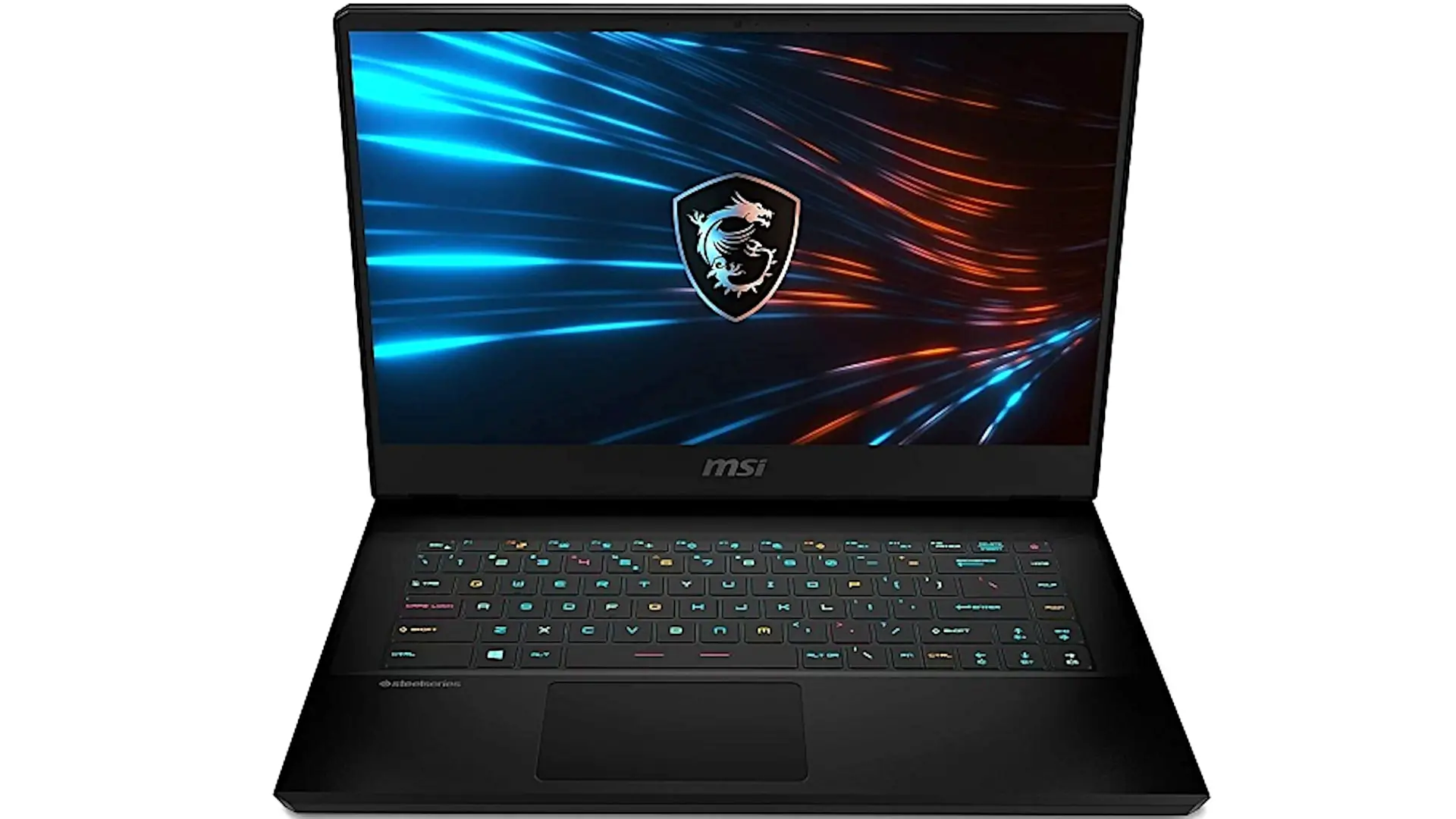
The MSI GP66 Leopard holds a notable distinction as one of the first laptops to house Nvidia’s RTX 3070 graphics processor, representing a full generational leap rather than an incremental refinement. Critically, this is the Max-P version of the GPU, meaning it operates at full power rather than the thermally constrained Max-Q variant found in thinner machines. For those who prefer a larger screen, MSI also produces the GP76, a 17-inch version sharing the same fundamental design, but the GP66 reviewed here is the 15.6-inch model.
The processor side of things remains in the Intel 10th Generation camp, which was still the current mainstream platform at the time of this review. The pairing of proven CPU architecture with next-generation graphics makes for an interesting combination worth examining closely.
Where the GP66 Fits in the MSI Lineup
The GP66 Leopard occupies a deliberate middle ground within MSI’s portfolio. It is neither the behemoth Titan, which targets maximum performance without compromise, nor the Stealth, which prioritises a slim and premium all-metal construction. The GP66 sits between those extremes, offering high-end gaming performance at a price that, while far from budget territory, avoids the stratospheric costs of the flagship tier.
Pricing for the GP66 ranges from approximately $1,600 at the entry level to $2,200 at the top of the RTX 3070 range, which is the configuration featured in this review. An RTX 3080 model is also available for between $2,400 and $2,600 for those requiring even more GPU performance.
Design and Build Quality
What the GP66 delivers at its price point is performance rather than premium aesthetics. The chassis is predominantly plastic, which keeps costs down but is not without its own appeal. MSI applied a thoughtful redesign to this generation, moving toward a more angular, modern silhouette that draws comparisons to Lenovo Legion and Acer gaming laptops in its general visual language. The update represents a clear step forward from MSI’s previous designs in this tier, even if it does not aspire to the refined finish of higher-end competitors.
The redesign did come at the cost of some connectivity. The SD card slot and Mini DisplayPort are absent from this generation. In their place, a USB-C port with DisplayPort 1.4 support allows two external monitors to be driven simultaneously, and an HDMI 2.0 port supports 4K output at 60Hz. Three USB-A ports, a 3.5mm audio jack, and Intel Ethernet round out the connection options. For most users, this selection is adequate, though the loss of an SD card reader will frustrate photographers and videographers accustomed to having one available.
Chassis lighting is minimal on this model, which is a reasonable trade-off given the price bracket. The budget is clearly directed toward the GPU rather than decorative illumination.
Keyboard and Trackpad
The GP66 introduces a new generation of SteelSeries keyboard that comes with slightly shorter key travel than its predecessor. Personal preference will determine whether that registers as an improvement or a step backward, but the feel remains crisp, and the actuation is satisfying. Full per-key RGB backlighting is included and fully programmable for those who want to personalise the layout.
The trackpad implements Microsoft Precision drivers and uses a buttonless design. The absence of physical buttons is a point of contention for users who prefer distinct tactile input, particularly since the click mechanism on this trackpad requires more physical force than would be ideal. Tap-to-click works reliably and is the more comfortable option in everyday use. The underlying precision of the tracking surface is good, and two-finger gestures behave as expected.
Processor and Memory Configuration
Intel 10th Generation processors power all GP66 models. Buyers can choose between a six-core Core i7 or either of two eight-core Core i7 options, all running at 45 watts, which is the standard for high-performance gaming laptops in this class. The 45-watt thermal envelope means that heat management remains a consideration, as 10th Generation Intel CPUs are known for running warm under sustained load. Intel’s 11th Generation platform was beginning to arrive at 35 watts around the time of this review, with 45-watt variants expected to follow later, but for immediate purchase purposes, the 10th Generation remains entirely competitive.
Both RAM slots are accessible and support DDR4 at 3,200MHz in 16GB or 32GB configurations, with a theoretical maximum of 64GB. Two M.2 SSD slots are available, one occupied from the factory with either a 512GB or 1TB NVMe drive depending on configuration. Wireless connectivity is handled by the Intel Wi-Fi 6 AX201 card alongside Intel Ethernet, with Bluetooth 5.1 also supported.
Display Options Explained
All GP66 Leopard models use Full HD resolution displays, which may surprise buyers who expected the RTX 3070 to be paired with a QHD panel. Nvidia had promoted the 3000 series as capable of driving 1440p displays with strong frame rates, but cost considerations appear to have kept this generation at 1080p across the lineup.
There are several panel options to navigate carefully. The top configuration includes a 240Hz IPS panel with near-complete sRGB colour coverage, which is the display fitted to the reviewed unit. Its colour accuracy and refresh rate make it an excellent choice for both gaming and general use. A 244Hz option is also available at a similar level of quality. However, the base 144Hz panel included with the cheapest configuration covers only 45% of the NTSC colour space, which translates to roughly 65 to 70% sRGB coverage. That is genuinely poor and worth avoiding. Spending the additional $100 to $200 required to step up to the better 144Hz panel, or ideally the 240Hz option, is strongly recommended.
Gaming Performance and GPU Output
The RTX 3070 inside the GP66 is operating at full power, with GPU consumption observed between 130 watts and a peak of 165 watts during the most demanding titles such as Cyberpunk 2077. This is not a reduced-specification mobile adaptation but a genuinely capable implementation of Nvidia’s new generation, which explains the premium attached to this model versus previous-generation equivalents.
In practice, gaming at Full HD on maximum settings with ray tracing enabled and DLSS set to auto produced consistently impressive results. Cyberpunk 2077 ran at approximately 65 frames per second during interior environments, and outdoor areas with more complex geometry held that same range. Battlefield V performed without fault under maximum visual settings, a title that has historically been demanding. Apex Legends on the 240Hz display pushed frame rates that genuinely approached the panel’s refresh ceiling, which is an extraordinary result for a competitive shooter.
At QHD resolution on an external monitor, the RTX 3070 remains entirely capable, delivering frame rates that make 1440p gaming very attractive. The DLSS implementation in the 3000 series has matured to the point where it provides a meaningful, visible benefit to frame rates without obvious image quality penalties, validating Nvidia’s long-standing claims for the technology.
The GP66 also supports Nvidia Optimus switchable graphics, with the option to lock the system to the dedicated GPU exclusively through MSI Dragon Center software for competitive frame rate scenarios. This mode change requires a system reboot, but the performance gain in certain titles makes it worthwhile. For the gaming benchmarks conducted in this review, dedicated GPU-only mode was used throughout.
CPU Thermals and Fan Behaviour
CPU temperatures during gaming varied noticeably depending on the title. For less demanding games, the processor settled comfortably into the 70s Celsius range. In more intensive titles, temperatures occasionally spiked into the low 90s, and some games produced brief thermal throttling events. This is consistent with Intel 10th Generation behaviour in a mid-tier chassis. Importantly, these thermal fluctuations did not produce perceptible stuttering or frame rate degradation in actual gameplay, so the practical impact is limited.
Fan noise is generally well managed. During Far Cry playtesting, fan volume was unobtrusive even under the Extreme Performance profile in Dragon Center software. Cyberpunk 2077 was the clear exception, pushing the fans to a volume that competed with in-game audio. This variability means the fan behaviour depends heavily on the specific workload, and users whose library consists primarily of competitive or less demanding titles will rarely encounter the louder end of the spectrum.
Audio output quality benefits from Nahimic 3 processing software and a decent headphone jack. The built-in stereo speakers, however, are two-watt side-firing units near the front edge with limited bass response and unremarkable overall performance. They are functional but unremarkable, and headphones or external speakers are recommended for any serious listening.
Battery Life Considerations
The GP66 carries a 65Wh battery, which is reasonable for a thin-and-light ultrabook but leaves something to be desired in a 15.6-inch gaming laptop. The included 230-watt power adapter is relatively portable by gaming laptop standards, but the machine is not designed for extended unplugged use. With Nvidia Optimus enabled, allowing the system to fall back to integrated graphics for lighter tasks, around three and a half to four hours of real-world use is achievable at moderate brightness. Under no realistic circumstances should the GP66 be expected to last a full day of unplugged productivity. It is a performance machine first, and battery endurance reflects that priority.
Internal Access and Upgradeability
Removing the bottom cover follows a process unique enough to warrant a careful approach. After unscrewing the Phillips head screws, including the one hidden beneath the factory seal sticker, the plastic clips around the perimeter require patient persuasion to release. MSI’s clip placement on this model is more complex than usual. The rear section wraps around the sides in a way that seems conventional at first, but the front edge of the bottom panel also wraps up toward the display lid rather than simply lifting away. First-time disassembly is the most challenging part, and working carefully prevents damage to the clips.
Once inside, the layout is orderly and familiar. The battery sits centrally, both RAM slots are accessible, the Intel Wi-Fi card is socketed and swappable, and two M.2 SSD slots provide straightforward storage expansion. The RAM not being soldered is a meaningful advantage over some competitors, notably Alienware’s premium models, and allows future upgrades without replacing the entire machine.
The cooling system uses a tripod heatsink configuration with three mounting screws rather than four, which provides slightly less even contact pressure across the CPU die. This is a modest shortcoming in an otherwise solid cooling design. The heat pipes are generously sized, the fan shrouds are metal rather than plastic, and exhaust venting is positioned at both the front and rear. Overall, the thermal solution performs adequately for this class, even if it is not the most aggressive available.
Final Verdict
The MSI GP66 Leopard makes a strong case for buyers who want genuine high-end gaming performance without paying for premium aesthetics. The RTX 3070 at full power is an excellent GPU for Full HD gaming at maximum settings and capable of producing impressive results at 1440p on an external display. The chassis redesign is a visual improvement over previous MSI mid-range generations, and the hardware fundamentals, including upgradeable RAM, two storage slots, and a socketed Wi-Fi card, make it a practical long-term investment.
The trade-offs are real but manageable. Battery life is limited, the trackpad requires more force than it should, a few ports from the previous generation were dropped, and the base model’s display should be avoided in favour of the better panel options. For the price, however, the performance on offer is compelling, and buyers who prioritise what happens inside the chassis over how the outside looks will find the GP66 a satisfying machine.
MSI GP66 Leopard
-
Performance - 96%96%
-
Price - 94%94%
-
Value - 95%95%