
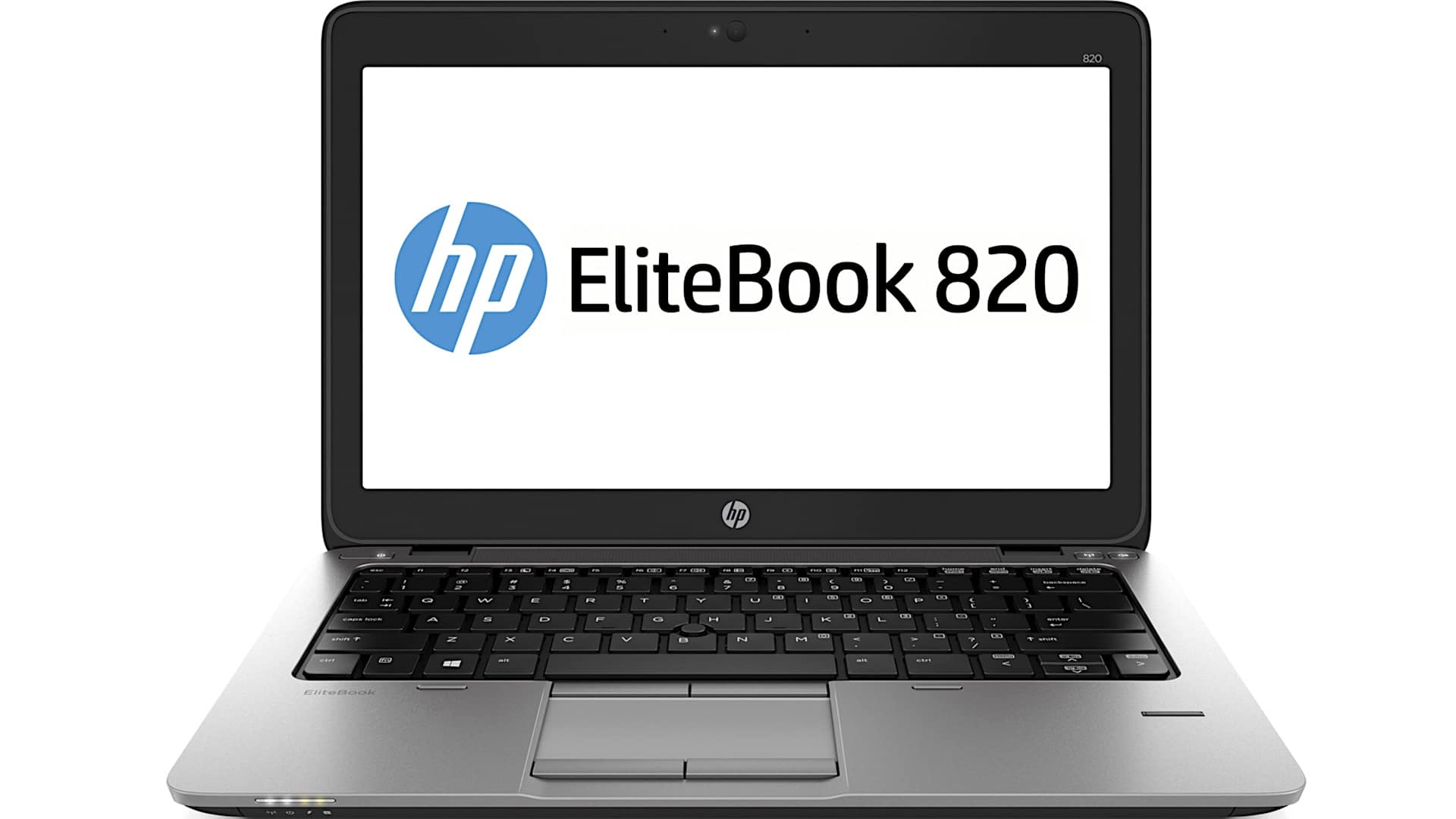
In this article, I give you my HP EliteBook 820 G1 review with specs included. This is an HP Business Ultrabook with a 12.5-inch display. It is available with Windows 7 or Windows 8 operating systems. And here’s the neat thing about it: it’s actually a really nice-looking machine. Usually, business ultrabooks are pretty bland, but HP brings a lot of their consumer styling here.
EliteBook is HP’s business line of machines, and they’re a nicer line of business machines on the market. Technically, this is the EliteBook 820 G1. Somehow G1 seems to get tacked on to a lot of the EliteBook names.
The first thing you’re gonna notice about it is its size of 12.5 inches. So it’s not really huge, and 12.5 inches is the new 13 inches maybe for business ultrabooks. The Lenovo ThinkPad X240 is also 12.5 inches; for example, the Dell XPS 12 (2013) is 12.5 inches, and so on.
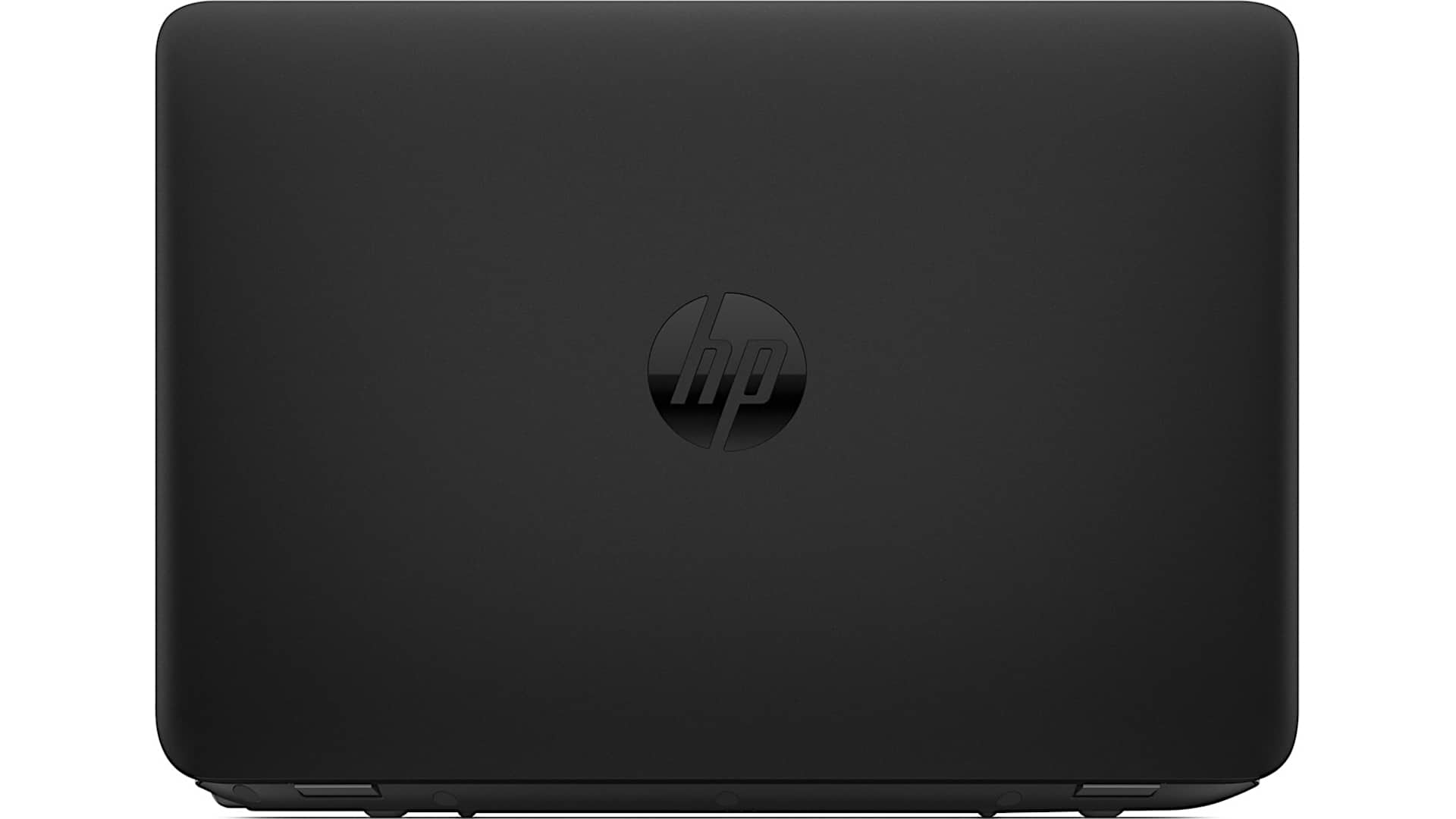
HP EliteBook 820 is not the skinniest laptop you’ve ever seen in the world, but there’s a good reason for it that I will discuss later in this review. But it still has some styling to it. It has a matte magnesium alloy lid that looks pretty good with the blacked-out HP logo. So, it’s not too ultra flashy there.
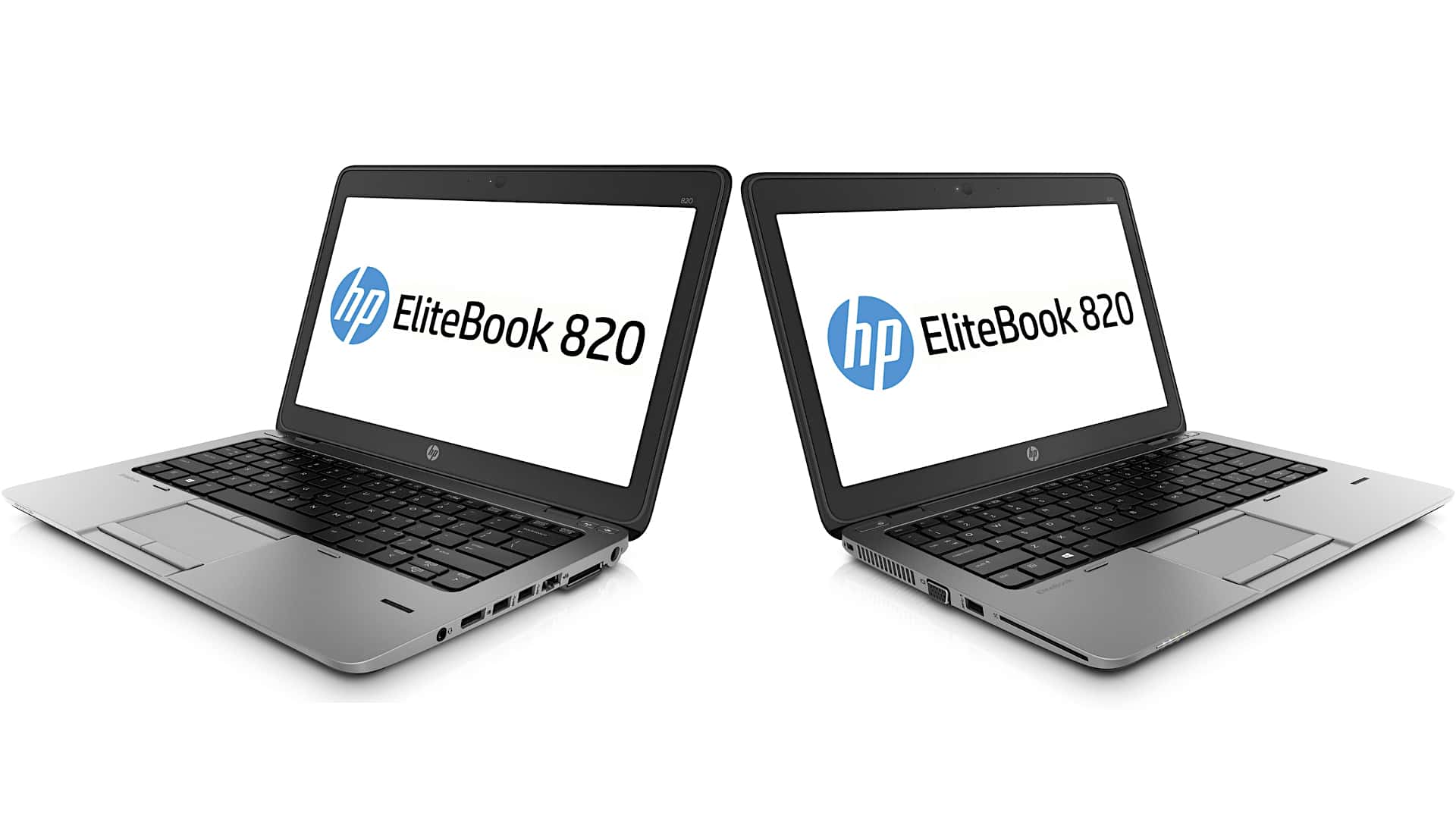
On the sides, you can notice its different color, and the complex lines here are kind of a nice accent, so it’s not just a simple black box. For a business machine, it is good-looking.
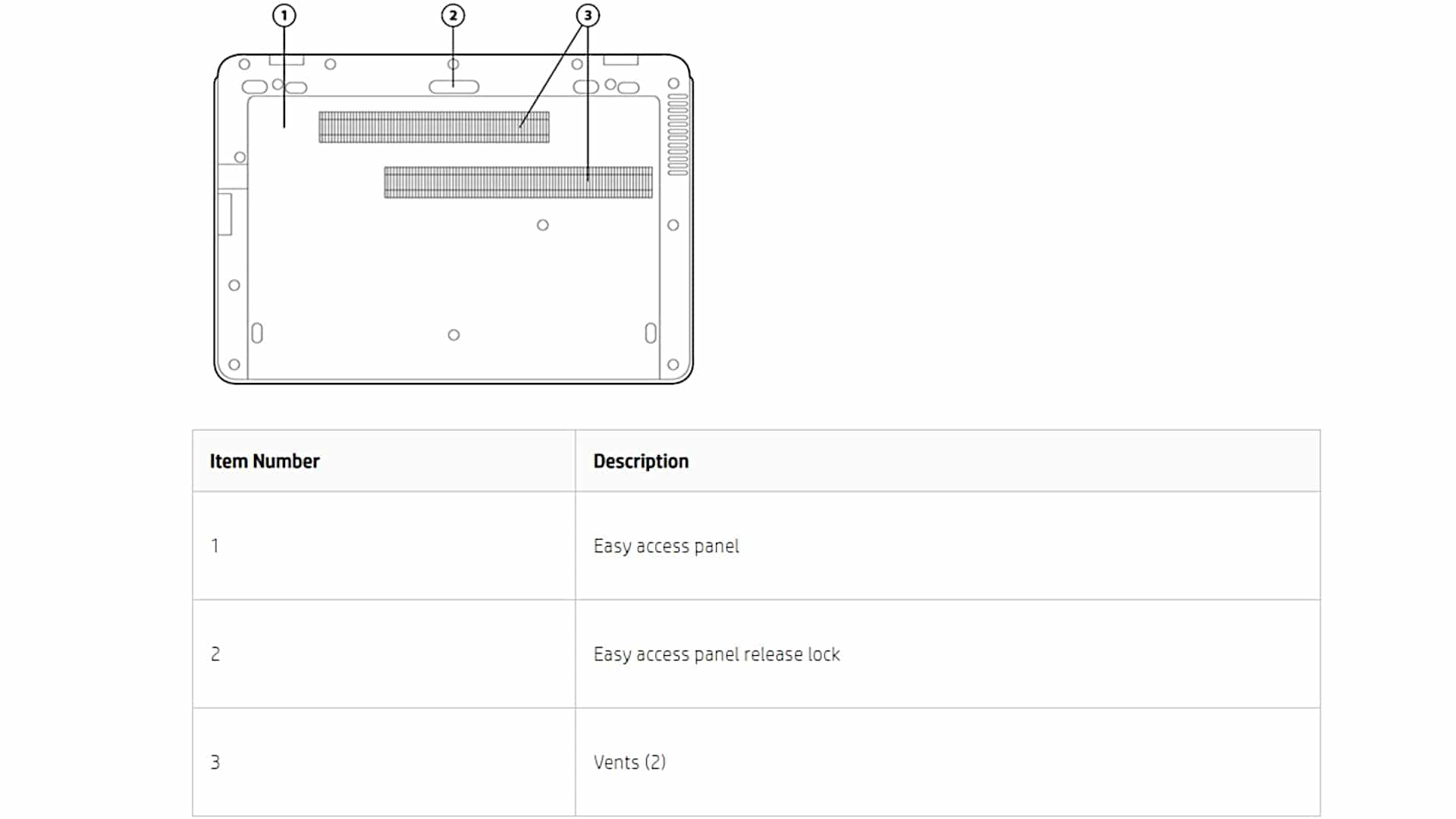
Again, it is not super skinny, but why is that? Well, here’s the neat thing. Usually, on an ultrabook, you can never get inside. Even on a ThinkPad X240, you’ve got to unscrew a whole lot of Phillips head screws. Well, HP is built differently. On the bottom side, there is a release switch to open the whole bottom panel and see everything.
The battery is removable, and there are two different battery capacities. I have the 46-watt-hour battery in here, and I can pop that easily using little release latches. It’s not a traditional style removable battery, but it is still swappable.
Next, there is a two-and-a-half-inch SATA hard drive. You can get this with a conventional spinning hard drive or an SSD drive.
It has the flash cache, which is clearly labeled. HP really expects IT departments to actually open these up and work on them, so it’s nice; there’s no guessing what the heck these things are. So if you want a spinning conventional hard drive and a 32GB caching drive, there is an M.2 slot for that.
Next, it has wide-area LTE networking, if you want that option. Wi-Fi card is dual-band Intel N 7260 Wi-Fi. Lastly, two RAM slots labeled DIMM2 on a 12.5-inch machine. You’re lucky if you even get one; RAM often sits just soldered on a motherboard.
Everything’s pretty clearly labeled here so you can figure things out. I have a 4 GB machine with one 4 GB DIMM. There’s a fan also reachable in case you want to blow it out and clean it up.
So, that’s why it’s a bit thicker, to allow access to internals. I know a lot of people are more interested in consumer line notebooks, but most love to have things like easily upgradable internals and more ports. For some people, the business notebooks really might be a better choice, especially something like this HP EliteBook 820 G1.
Inside this thoroughly modern Ultrabook, there are 4th generation Intel Haswell Ultrabook 15 watt CPUs. You can choose between Core i3, i5, or i7. You can get ones with V-Pro or without.
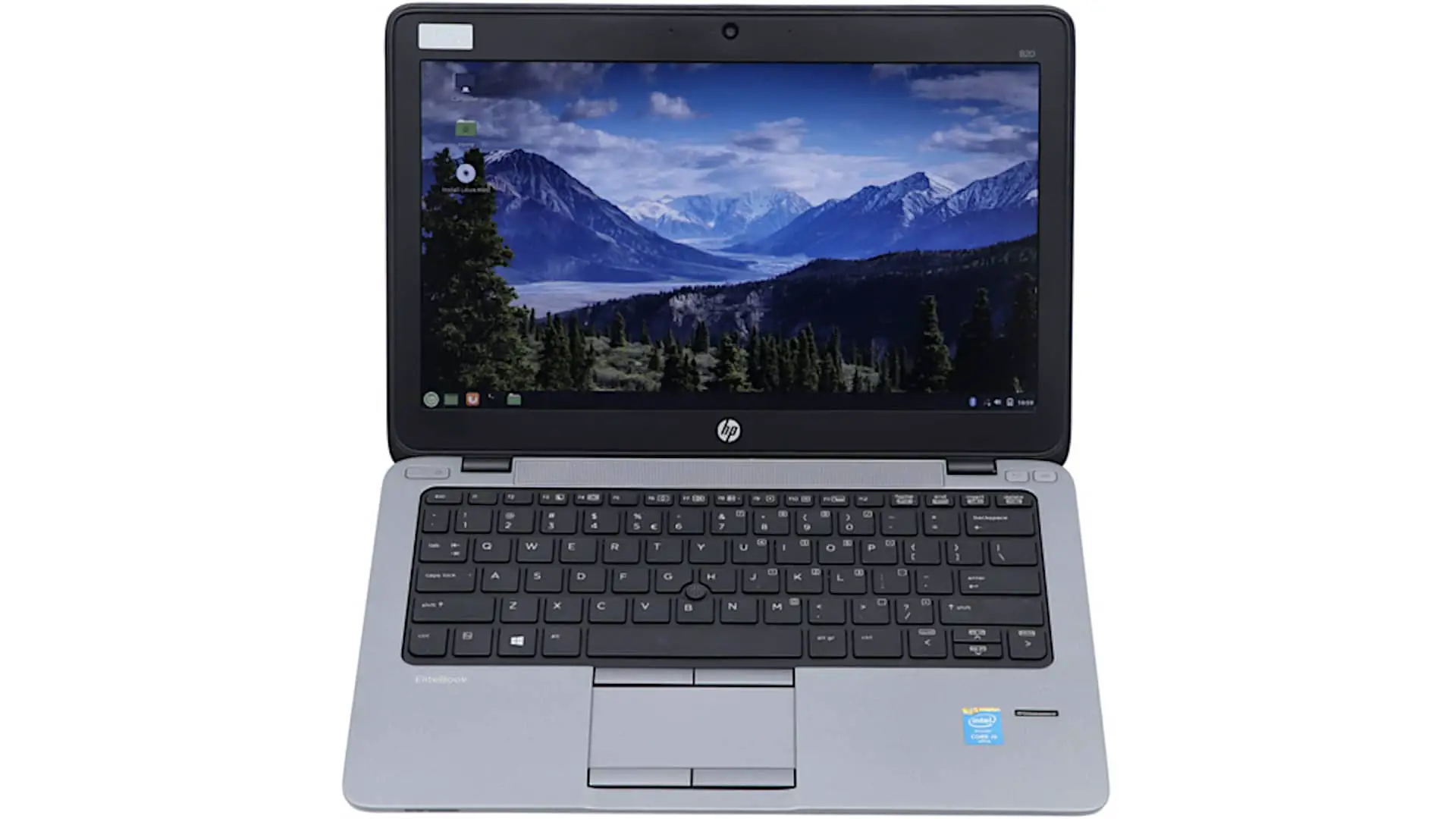
Inside of my HP EliteBook 820 G1 is an Intel i5 4200U dual-core clocked at 1.6 gigahertz. As mentioned previously, I have 4 GB of RAM and a 180 GB Intel SSD. You can get it with a variety of different SSDs or a 500 GB 7200 RPM spinning hard drive with or without the flash cache.
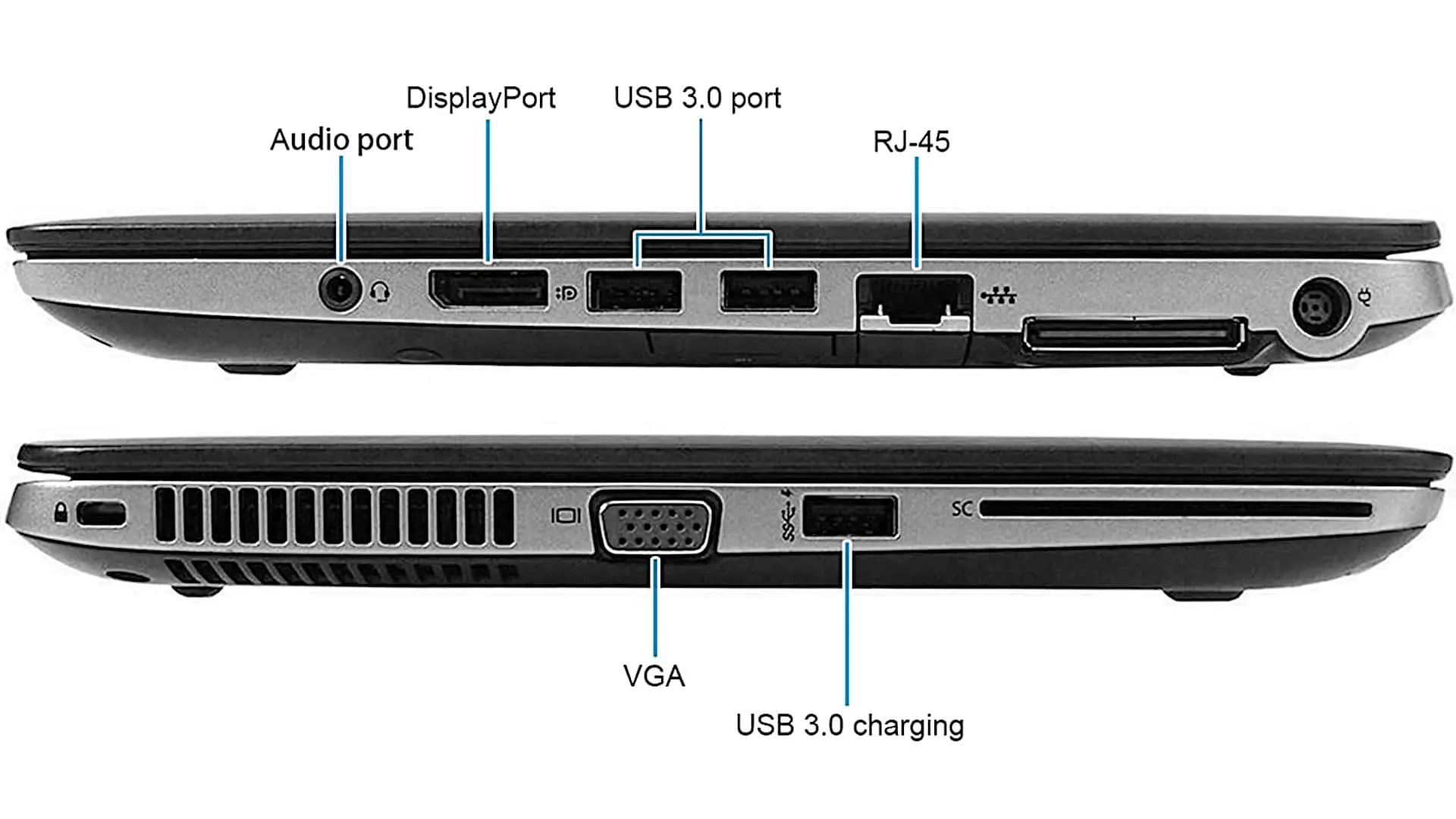
Now, in terms of ports, there are a lot of ports on this thing. Obviously, there are some ventilation cutouts too. It is a fairly cool, quiet machine. Ultrabooks usually are quiet. This one has room for cooling inside, so this is not a noisy machine at all; you can bring it to a library or so.
Design and Connectivity
The HP EliteBook 820 G1 offers an impressive selection of ports for a compact business laptop. On the left side, you’ll find a security lock slot, cooling vents, a VGA output for older monitors and projectors, a USB 3.0 port with charging capabilities, and a Smart Card reader designed for enterprise environments.
The front edge houses various status LEDs that indicate power, sleep mode, battery charging, and other system functions.
On the right side, HP includes a 3.5mm audio combo jack, a full-size DisplayPort for external high-resolution displays, two additional USB 3.0 ports, Gigabit Ethernet, an SD card reader, the power connector, and a docking connector.
Because this is a business-focused machine, it supports HP docking stations, allowing users to quickly connect peripherals, monitors, networking, and power with a single docking connection when returning to their desks.
The lid features the familiar HP logo, giving the laptop a professional appearance. Considering its 12.5-inch size and weight of just 2.94 pounds, the EliteBook 820 G1 offers excellent connectivity without sacrificing portability.
Build Quality and Durability
HP designed the EliteBook 820 G1 with durability in mind. The chassis feels solid and resistant to flex, reflecting HP’s MIL-SPEC durability claims. While no laptop is intended to survive rough handling, this model feels capable of withstanding the demands of everyday business travel.
The included power adapter is compact and lightweight, making it easy to carry during commutes or business trips. Despite its small size, it provides adequate power while maintaining portability.
Display Quality
The review unit features a 12.5-inch 1366×768 non-touch display. Although HP offers higher-quality panel options, touchscreen functionality does not appear to be available.
One advantage of the display is its matte finish, which significantly reduces reflections and glare. However, viewing angles are only average, and color reproduction is acceptable rather than impressive. While not the worst display available, it falls short of premium standards.
Many business laptops prioritize functionality over display quality, and the EliteBook 820 G1 follows that trend. For office applications, spreadsheets, email, and productivity work, the resolution remains perfectly adequate.
Windows and Software Options
The EliteBook 820 G1 was available with either Windows 7 or Windows 8. This particular configuration runs Windows 7, which explains the absence of a touchscreen, since touch-based interaction was less important on that operating system.
Unlike some competitors, the display hinge does not allow the screen to lie completely flat. For most users, however, this limitation is unlikely to impact daily use.
Keyboard and Input Devices
HP has a strong reputation for producing comfortable keyboards, and the EliteBook 820 G1 continues that tradition. The keyboard feels firm with minimal flex and includes adjustable backlighting, making it easy to use in low-light environments.
The layout is logical and user-friendly, with all keys positioned where users expect them to be. Dedicated function keys provide quick access to multimedia controls, volume adjustment, microphone muting, and other business-related features.
At the top-right corner are dedicated wireless and audio mute buttons, while the power button sits on the opposite side. Between them is the speaker grille.
HP also includes a pointing stick in the center of the keyboard, similar to those found on Lenovo ThinkPad systems. This feature is aimed at business users who prefer trackpoint-style navigation.
The touchpad retains dedicated navigation functionality through soft integrated buttons, although physical click buttons have been eliminated. While comfortable to use, key travel is somewhat shallow compared to premium ThinkPad or Dell business keyboards. Overall, the keyboard performs well but doesn’t quite reach the top tier of laptop keyboards.
Comparison with the Lenovo ThinkPad X240
The EliteBook 820 G1 competes directly with the Lenovo ThinkPad X240. Both laptops share similar dimensions and offer 1366×768 displays.
However, the ThinkPad benefits from a superior IPS panel, delivering more vibrant colors and better viewing angles right out of the box. HP requires an optional display upgrade to achieve similar quality.
When it comes to typing, Lenovo’s keyboard offers slightly deeper key travel, making it more comfortable for extended use. However, some users dislike Lenovo’s buttonless touchpad design, whereas HP retains more traditional trackpad controls.
Both systems feature sturdy construction. Lenovo relies on carbon fiber and magnesium components, while HP uses a metal exterior. Pricing is also comparable when similarly configured with Intel Core i5 processors, 4GB of RAM, and SSD storage.
Security Features
Security is a major focus of the EliteBook 820 G1. The laptop includes a fingerprint reader positioned conveniently on the lower-right palm rest.
Additional security technologies include a Trusted Platform Module (TPM), BIOS protection features, and HP Trust Circles software. Trust Circles helps secure files by limiting access to approved contacts, adding another layer of protection against unauthorized access and data theft.
Performance and Multimedia
As expected from a business Ultrabook, performance is solid for productivity tasks. The system runs a 64-bit version of Windows and handles web browsing, office applications, video playback, and multitasking without difficulty.
Although the 1366×768 resolution limits the amount of content visible on screen compared to Full HD displays, it remains sufficient for most office workloads.
The integrated speakers perform surprisingly well for a business laptop. They provide clear audio that is more than adequate for presentations, conference calls, and multimedia playback.
Wireless connectivity includes dual-band Wi-Fi, Bluetooth 4.0, and optional LTE/4G mobile broadband support for users who require connectivity while traveling.
Hardware Configuration and Battery Life
The EliteBook 820 G1 supports two memory slots and can be configured with up to 16GB of RAM. Processor options range up to Intel Core i7 ultra-low-voltage chips, including the Core i7-4500U and 4600U.
Storage options include SSD upgrades, allowing users to significantly improve responsiveness and performance.
Battery life is respectable thanks to the available 46Wh battery. Real-world usage typically delivers between seven and seven-and-a-half hours per charge, which is competitive for a business Ultrabook of its generation.
Benchmark Results
Performance scores align closely with expectations for an Intel Ultrabook platform.
- PCMark 7: Approximately 4,018 points
- wPrime calculation: 24.8 seconds
- Geekbench 3 Single-Core: 2,395
- Geekbench 3 Multi-Core: 4,647
SSD performance is solid, though not class-leading compared to newer drives available today. Fortunately, upgrading storage is relatively simple.
Final Verdict
The HP EliteBook 820 G1 is a capable business Ultrabook that combines portability, durability, strong security features, docking support, and a generous selection of ports.
Its biggest weakness is the entry-level display, which offers only average image quality and a modest 1366×768 resolution. Fortunately, HP provides higher-quality display options for users who prioritize screen performance.
For business professionals seeking a lightweight, durable laptop with excellent connectivity and security features, the EliteBook 820 G1 remains a practical and well-rounded option. Pricing starts around $874, while more fully equipped configurations can reach approximately $1,200, placing it firmly within the premium business laptop category.
HP EliteBook 820 G1
-
Performance - 95%95%
-
Price - 94%94%
-
Value - 95%95%