
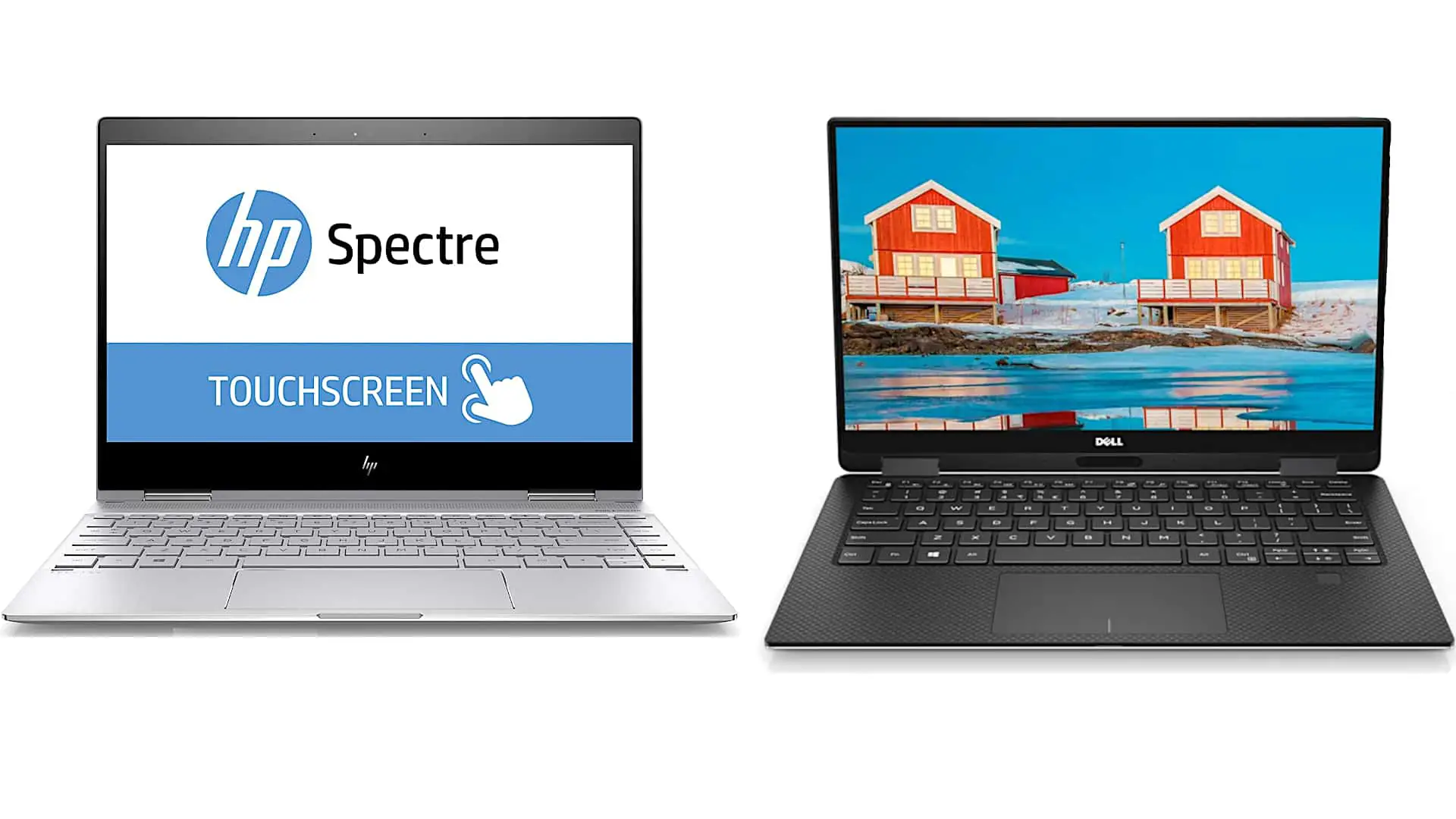
The 2017 versions of the HP Spectre x360 and Dell XPS 13 2-in-1 were two of the most popular premium convertible ultrabooks on the market. Both featured Intel’s 7th-generation Kaby Lake processors, touchscreen displays, and 360-degree hinges, but they took very different approaches to performance, portability, and value.
Pricing and Overall Value
One of the most noticeable differences between these two laptops is price.
The HP Spectre x360 offered significantly more value for the money. A configuration featuring a Core i7 processor, 16GB of RAM, and a 512GB SSD could be purchased for around $1,299. A similarly equipped Dell XPS 13 2-in-1 cost closer to $1,799, making it substantially more expensive.
Even after adding premium options such as pen support or higher-resolution displays, the HP generally remained the more affordable choice.
Processor Performance
Although both laptops use Intel Kaby Lake chips, their processors belong to different performance classes.
The Spectre x360 uses standard 15-watt dual-core ultrabook processors, delivering performance similar to other premium notebooks from Lenovo, Dell, and other manufacturers.
The Dell XPS 13 2-in-1 relies on Intel’s Y-series processors, formerly known as Core M. These low-power chips consume just 4.5 watts, helping reduce heat and improve efficiency, but they also provide less sustained performance.
While the Dell can achieve impressive turbo boost speeds for short bursts, the HP handles demanding workloads much better. Tasks such as:
- Adobe Lightroom editing
- Software development
- Video encoding
- Heavy multitasking
benefit greatly from the Spectre’s more powerful processor.
For users planning to keep their laptop for several years, the HP’s stronger CPU offers better long-term performance.
Pen Support and Display Choices
Digital artists and note-takers will appreciate pen compatibility.
Every Dell XPS 13 2-in-1 configuration supports an active stylus, using Dell’s optional Wacom-based pen.
The situation with the Spectre x360 was a bit more complicated. Early versions of the redesigned Spectre lacked digitizer hardware entirely, meaning pen input was not supported. Later models added active pen support, typically increasing the price by about $200.
Both laptops were available with Full HD displays. Dell additionally offered a high-resolution 3200 × 1800 QHD+ display, while HP later introduced a 4K display option for the Spectre lineup.
Ports and Connectivity
The HP Spectre x360 provides a more versatile selection of ports.
HP Spectre x360
- Two Thunderbolt 3 / USB-C ports
- One full-size USB-A port
- Headphone jack
The inclusion of a traditional USB-A port means fewer adapters are required for existing accessories.
Dell XPS 13 2-in-1
- One Thunderbolt 3 port
- One USB-C port
- Headphone jack
- MicroSD card slot
Dell’s slimmer design sacrifices some connectivity, and only one of its USB-C ports supports Thunderbolt 3.
Design and Portability
The Dell XPS 13 2-in-1 excels when it comes to compactness.
Its ultra-thin bezels allow it to occupy a footprint closer to that of a 12-inch notebook, despite having a 13-inch display. The near-borderless design gives it a very modern and premium appearance.
The Spectre x360 has a more traditional 13-inch laptop footprint. While it features slim side bezels, it still retains bezels above and below the display.
One advantage of HP’s design is webcam placement. The webcam sits above the screen, where most users expect it to be.
Dell’s bezel-free design forced the webcam below the display, resulting in the infamous “chin-cam” angle that often captures users from an unflattering perspective during video calls.
Security Features
Both laptops support modern biometric login options.
The Spectre x360 includes a Windows Hello infrared camera out of the box for facial recognition.
Dell planned to enable Windows Hello support through a software update, but in the meantime it included a fingerprint reader, allowing secure logins without entering a password.
The HP model does not include a fingerprint scanner.
Weight Comparison
The weight difference between the two systems is minimal.
- Dell XPS 13 2-in-1: approximately 2.7 pounds
- HP Spectre x360: approximately 2.9 pounds
In everyday use, most people would have difficulty noticing the difference.
Battery Life
You might expect the Dell’s low-power processor to provide a clear battery life advantage, but real-world testing suggests otherwise.
Both systems offer respectable endurance, but the HP Spectre x360 generally lasts one to two hours longer than the Dell when equipped with comparable 1080p displays.
The Dell can achieve roughly eight hours of light to moderate use at moderate brightness levels, while the Spectre often exceeds that figure.
Software and Reliability
Both HP and Dell provide solid driver support, automatic update tools, and easy access to downloads.
However, the Spectre x360 has been known to experience a minor issue where the battery slowly drains even when the laptop is completely powered off. In some cases, it can lose around 5% of its charge per day.
For users who use their laptop daily, this is unlikely to be a major concern. However, it can become noticeable if the system sits unused for several days.
The Dell did not exhibit the same behavior, although it occasionally consumed more power than expected during Connected Standby mode.
Final Verdict
Both the HP Spectre x360 and Dell XPS 13 2-in-1 are premium convertible laptops with attractive designs and excellent build quality.
The Dell stands out with:
- A smaller footprint
- Extremely thin bezels
- Universal pen support
- Fingerprint authentication
The HP counters with:
- Lower pricing
- Faster processors
- Better sustained performance
- Longer battery life
- More ports
- Better webcam placement
For users who prioritize maximum portability and design, the Dell XPS 13 2-in-1 is a compelling option. However, for overall value, stronger performance, and greater practicality, the HP Spectre x360 emerges as the better all-around choice.